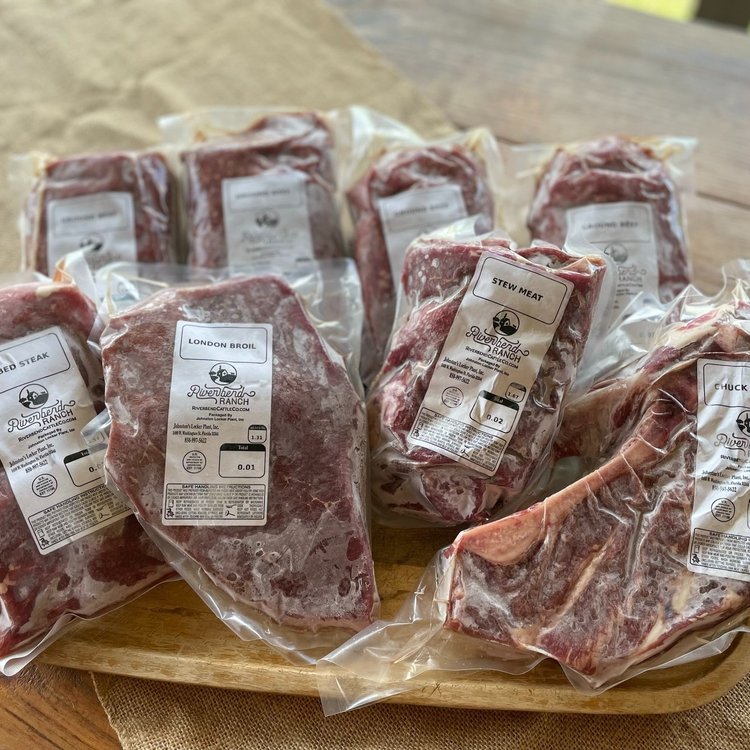


Understanding Beef Cuts: Why Some Are Meant for Slow Cooking
Not all beef cuts are created equal, and that’s a good thing. Some cuts are tender and quick-cooking, while others are meant to be cooked slowly and patiently. At Riverbend Cattle Company, understanding how and why beef cooks the way it does helps families choose the right cut for the meal they’re planning.
Slow-cooking cuts often come from parts of the animal that work harder. These muscles develop more connective tissue, which can feel tough if rushed but becomes incredibly tender when given time.
What Makes a Cut Ideal for Slow Cooking
Cuts like chuck roast, short ribs, and beef shank contain collagen-rich connective tissue. When cooked low and slow, that collagen breaks down into gelatin, creating moisture, tenderness, and deep flavor.
This is why cuts such as Riverbend Cattle Company chuck roast, short ribs, and beef shank are best suited for braising, roasting, or slow simmering rather than high-heat grilling.
Patience Is the Secret Ingredient
Slow cooking isn’t about complexity—it’s about allowing time to do the work. Gentle heat transforms these cuts into meals that feel comforting and satisfying, perfect for weekends, gatherings, or days when dinner can take care of itself.
Riverbend Cattle Company believes that when families understand how beef cuts behave, cooking becomes more intuitive and far less stressful.
Choosing the Right Cut with Confidence
Knowing which cuts benefit from slow cooking helps prevent disappointment and waste. When you choose a cut aligned with your cooking method, the result is consistently better meals and a deeper appreciation for the animal as a whole.
This understanding is part of honoring ranching traditions and making the most of every cut Riverbend Cattle Company offers.